




Telling the Bees
Telling the bees is an age-old custom primarily rooted in European, especially Celtic, tradition. Beekeepers would inform the hives of major life events such as births, marriages, deaths, and departures, ensuring the bees were kept aware of the human happenings around them. Mourning practices were particularly significant; upon the death of a beekeeper, the new caretaker would formally introduce themselves to the bees, seeking their acceptance as the new master. It was also essential for beekeepers to speak calmly to the bees, avoiding any harsh language that might disturb them. Moreover, there was a strong belief that bees could sense emotions and would only thrive if treated as part of the family, reflecting a deep, respectful connection between human and bee.
Historically, bees were seen as sacred beings with a profound connection to the soul and spiritual realms. In Greek mythology, the Melissae were revered priestesses of the goddess Demeter, also associated with Artemis and Cybele, and were known as "bee-maidens." These priestesses were intimately connected to the goddess Melissa and were believed to be the custodians of sacred knowledge and rituals. Their roles often involved shamanistic or ecstatic practices, serving as vital intermediaries between the spiritual and human realms. This connection underscores the deep veneration for bees within mythology, recognizing them as sacred, life-giving creatures intimately tied to the soul's journey. The Melissae's association with bees reflects the ancient belief in bees as symbols of wisdom and life, revered for their perceived connection to the divine.
When a death occurred within the household, it was customary to drape the hive in black cloth, symbolically allowing the bees to mourn alongside the family. If a beekeeper passed away, the new owner would formally introduce themselves to the bees, maintaining the relationship between humans and these revered creatures.
The tradition of telling the bees underscores the belief that bees are sensitive to human emotions and energies. Failing to inform them of important events could lead to negative consequences, such as the bees abandoning the hive or perishing. This practice was embedded in European folklore and later adopted in North America by settlers. In England, Ireland, and Germany, each region had its unique twist on the tradition. For instance, in Brittany, hives were adorned with scarlet fabric during weddings, while in Germany, people might sing to the bees when sharing important news.
In various folklore and cultural traditions, bees are often seen as more than just industrious honey-makers; they are also portrayed as mystical messengers from the beyond. Many old tales suggest that a bee entering your house is delivering significant news.
In Cornish tradition, if a bee lands on your hand, it foretells an incoming fortune, while Germanic folklore claims that a bee landing on your head heralds great success.
In ancient Egypt, bees were considered divine messengers, believed to be born from the tears of the sun god Ra, symbolizing their elevated status.
Celtic mythology linked bees to hidden wisdom and ancient knowledge, and in Greek tradition, the Oracle of Delphi was sometimes referred to as "the Delphic Bee," highlighting their connection to prophecy and insight.
Russian folklore suggests that if a bee circles someone three times, it indicates that person is about to embark on a journey.
In parts of Appalachia, a bee flying into a house and then leaving means a stranger is coming, but if it stays inside, the visitor will remain for an extended period.
Some cultures believe in the spiritual reincarnation of souls as bees. In Lithuanian tradition, good people's souls were thought to reincarnate as bees.
In Slavic mythology, bees were revered as sacred creatures acting as intermediaries between the living and the dead, with the belief that killing a bee might sever a connection to a departed ancestor.
The custom is linked to the idea that bees are intermediaries between humans and the divine


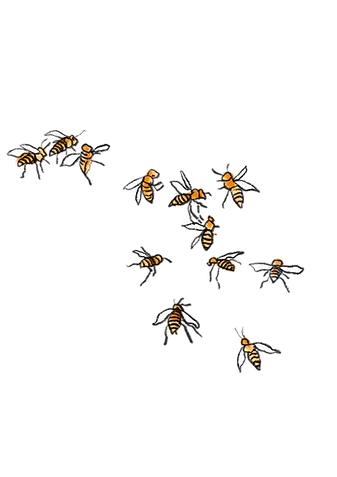





I know some bees. I will carry your words carefully to them + with sacred intention deliver the messages. Sincerely, truly, with all my heart. Every word.


Remember the holy honey bees?
Sacred in their role
Drenched in sunlight
Dusted in pollen
Brilliant hues of gold
Wild, like you
Connected
Like us
from Remember Your Wild (unpublished)
- Ara Elizabeth

.jpg)